My Process From Start To Finish
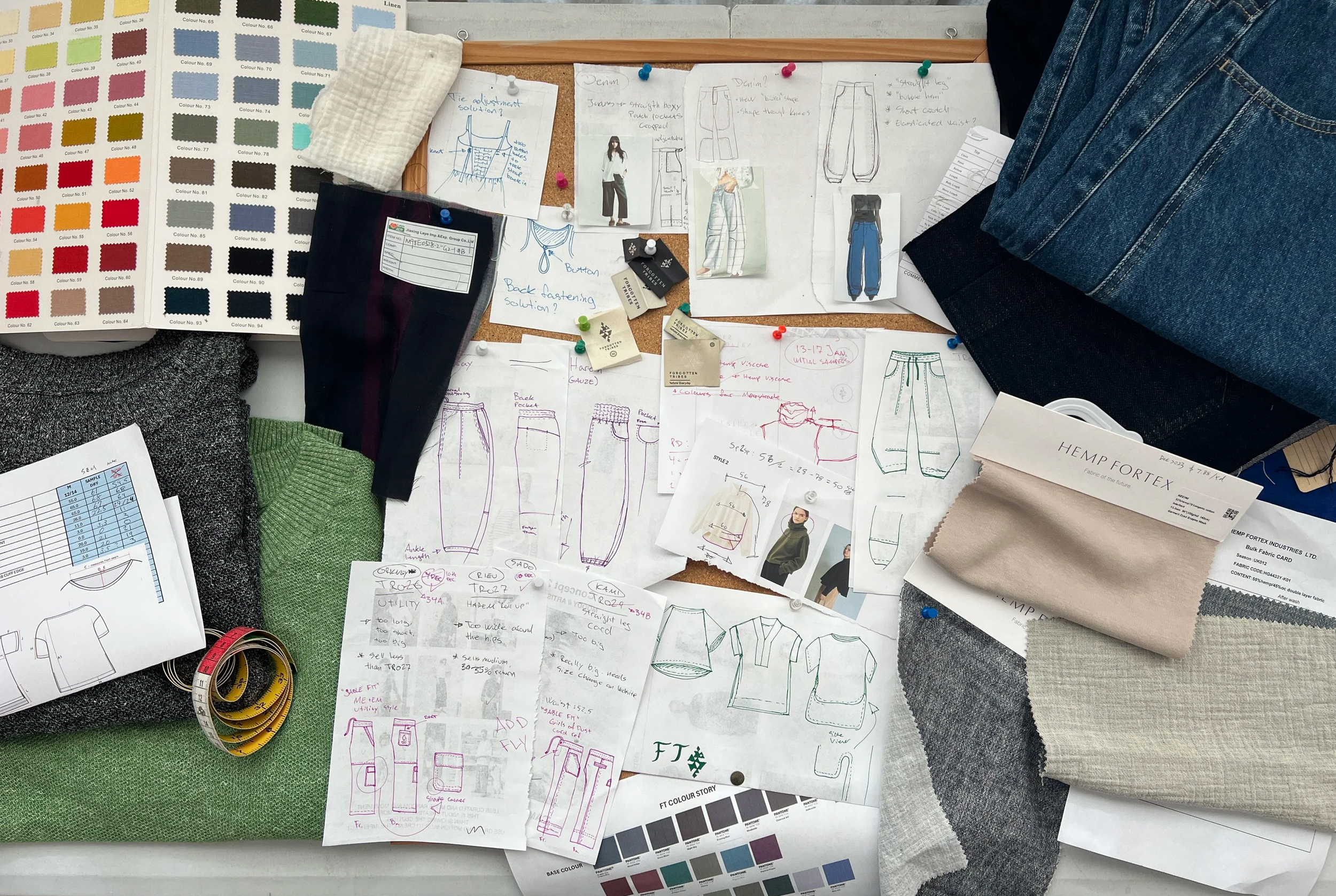
Work and Development
Initial Reflection: Who Am I?
It has been really interesting to write this journal post, and more challenging than expected. I genuinely thought I could write this on a Sunday afternoon. I’ve been in this industry long enough that I assumed I knew my own process inside out. But the more I wrote, the more I realised there was no standard way to do it, no single right answer. Where I start always depends on the brief, the team size, the brand I am working for, and who the customer actually is. So I kept writing and writing under each heading because there is genuinely so much to say, and honestly, I love talking about it.
What I have tried to do is figure out what my core personality traits as a designer actually are, rather than just describing a process. And the one that keeps coming back is this: I need to touch things, feel them, try them on. Menswear, womenswear, completely the wrong size, it does not matter. I will always end up trying the products, much to the amusement of most teams I have worked with, just to feel the weight, the drape, the whole energy of a garment. That tells me more than looking at it ever could.
I am also very technical, both in constructing a garment and understanding the commercial aspects of it. I can draft up a pattern, stitch a toile together for quick detail sampling or an in-house fitting, and I know how to pull apart a product category, analyse the margin structure, and work out what makes something commercially viable. That side of the work can get very office-like very quickly, so I have learned to protect the other thing, which is the fun. When I am having fun, I have confidence. Confidence to be creative, to suggest something unusual, to be the person in the room who says, “this might sound crazy, but...” And when that phrase comes out of my mouth, I know something interesting is happening. Walking in circles, thinking out loud, feeling the moment when the energy shifts and the creative spark actually arrives, that is the part I would not trade for anything.
Anyway, back to the more structured version. I think I will expand on several of these sections in future posts, but for now this is where I am. And if you want the longer version, I am always up for a coffee.
Fabric first. Well, almost.
It is actually the second step, if I am honest. Before fabric enters the picture I go back through the previous collection, what sold, what did not, which colours held up, where the gaps are. There is always a mix of tops, bottoms, separates and accessories to consider, so the question is what to carry forward in new colours or textures, what to cut, and where the genuine newness has to come from. Only once that is clear do I start thinking about material.
I have worked across leather, tailored womenswear, mens streetwear in soft jerseys, structured technical outerwear, luxury shearling, and fully natural materials like hemp, bamboo and wool. Every single one has its own logic. The same silhouette in a different cloth is not the same garment and I have learned this the hard way, carrying a best-selling block into a new material and assuming it would translate cleanly. It rarely does.
Starting point
My approach has always been design-led rather than trend-driven. Finding classic wearable shapes and reworking them into the brand's own language is where I naturally land. That said, staying across the industry matters and I follow several platforms and publications to keep that antenna sharp.
Once I know where the gaps are, I pull archive references and build mood boards before heading to tradeshows in London and Paris, not with a blank mind but with specific questions. Do I need more knitwear to strengthen the range? A new jersey or french terry? A fresh denim wash? At Première Vision I always visit my existing suppliers first to see their newest developments and to keep the relationship alive. A good supplier relationship is genuinely underrated and when there is real trust on both sides everyone benefits, commercially as much as personally. It was also at Première Vision that I found the linen and cotton twisted yarn that became one of our summer knit styles at Forgotten Tribes. I only found it because I knew exactly what gap I was trying to fill.
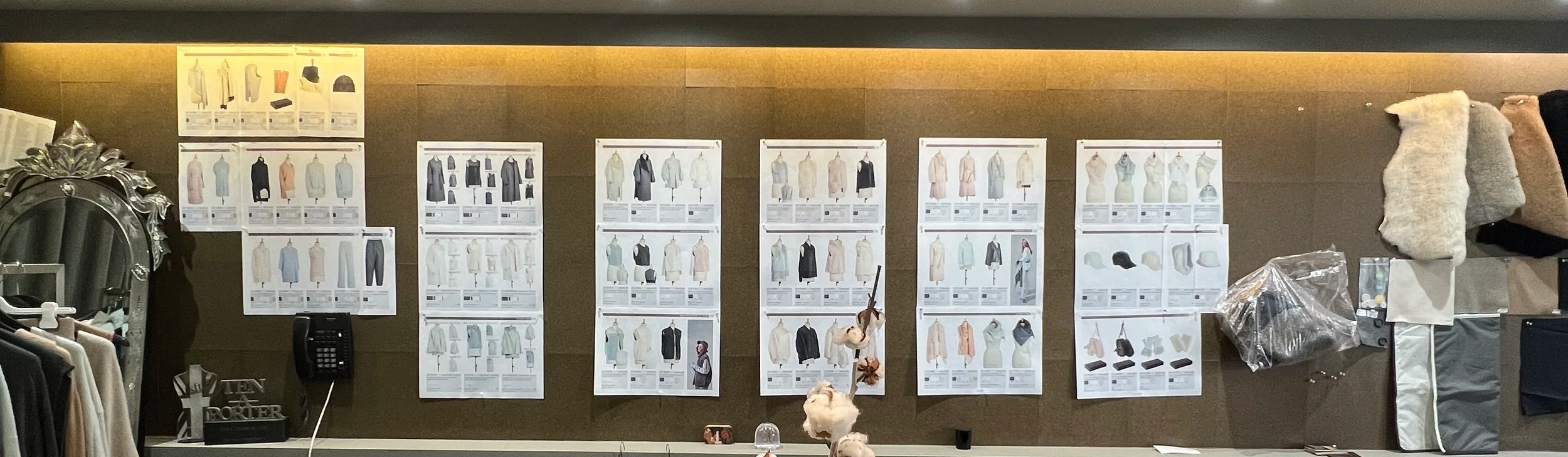
A Karl Donoghue Linesheet for Review
Colour
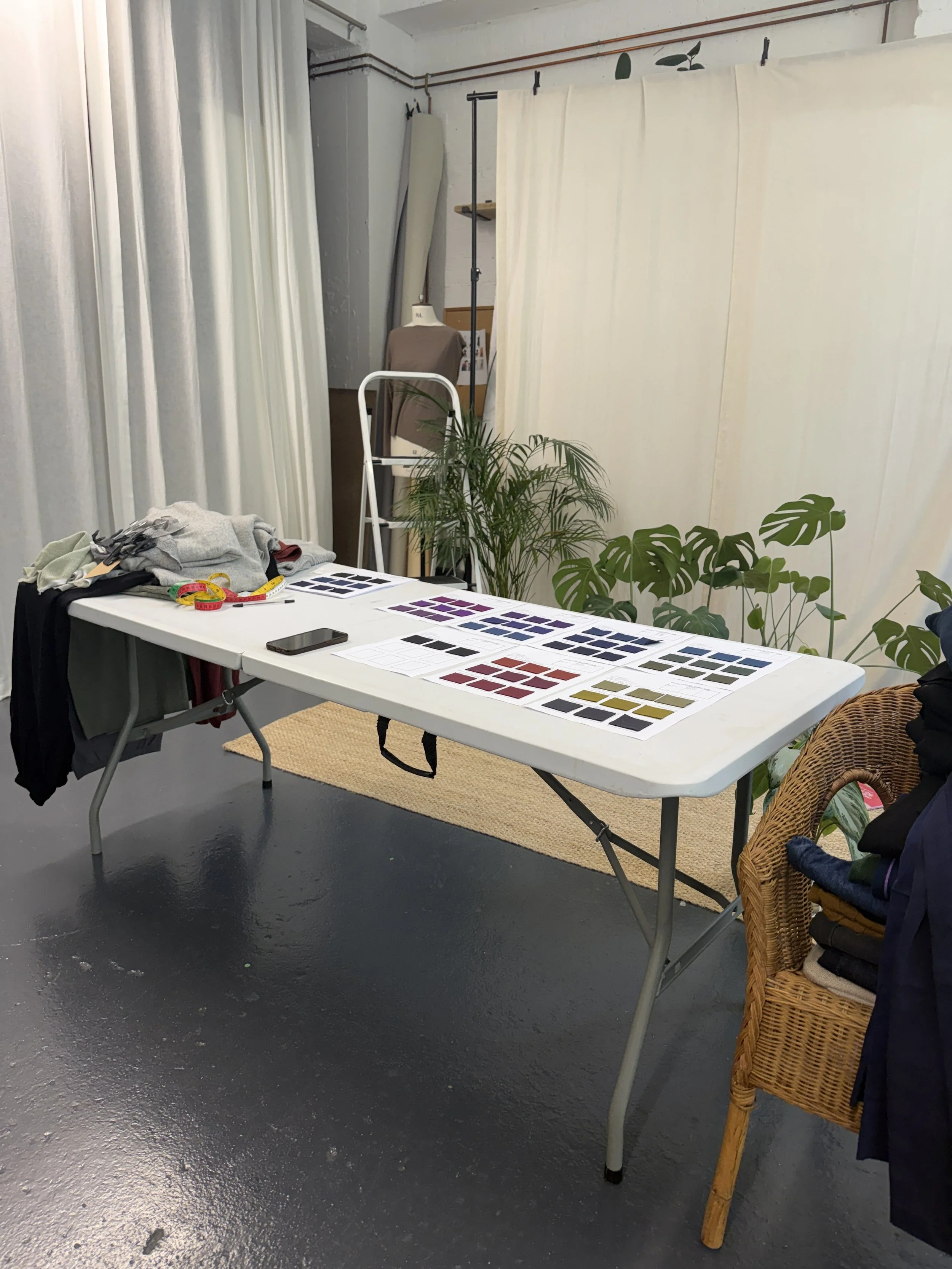
Colour looks straightforward from the outside and never is. Every brand has a completely different relationship to it and the challenge is giving the customer partly what they expect while finding what they did not know they wanted. I tend to work with one or two darks, two or three midtones and one or two lights, adjusted for the brand and depending on the size of the range.
Karl Donoghue and Forgotten Tribes are a good illustration of how differently this plays out in practice. At Karl Donoghue black felt too harsh for the luxury customer and cream sold consistently. At Forgotten Tribes it is the complete opposite, black is essential across almost every style and anything in white or cream sits untouched. Same age group, completely different customer. Getting that wrong is expensive and getting it right is what keeps sell-through strong.
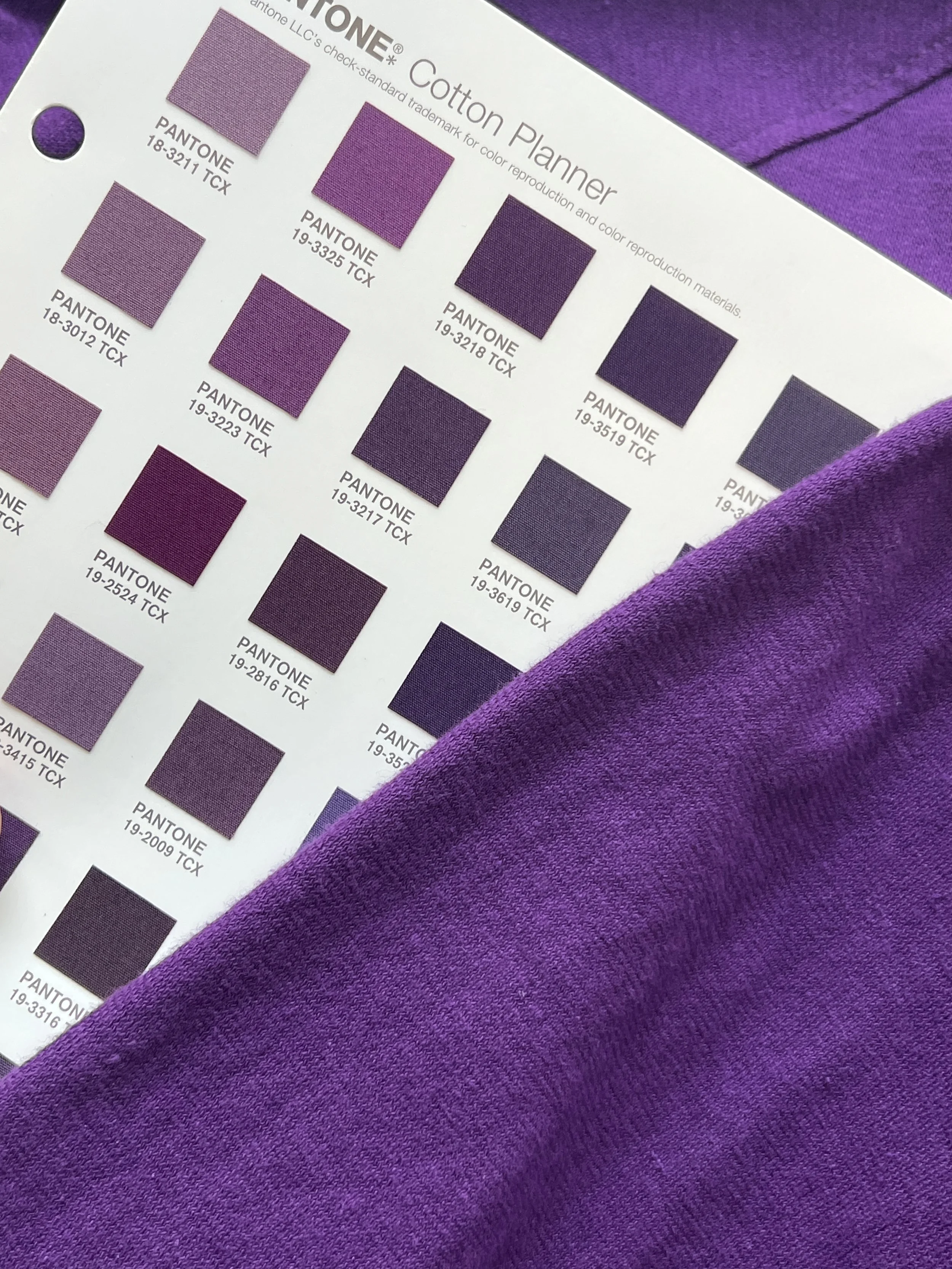
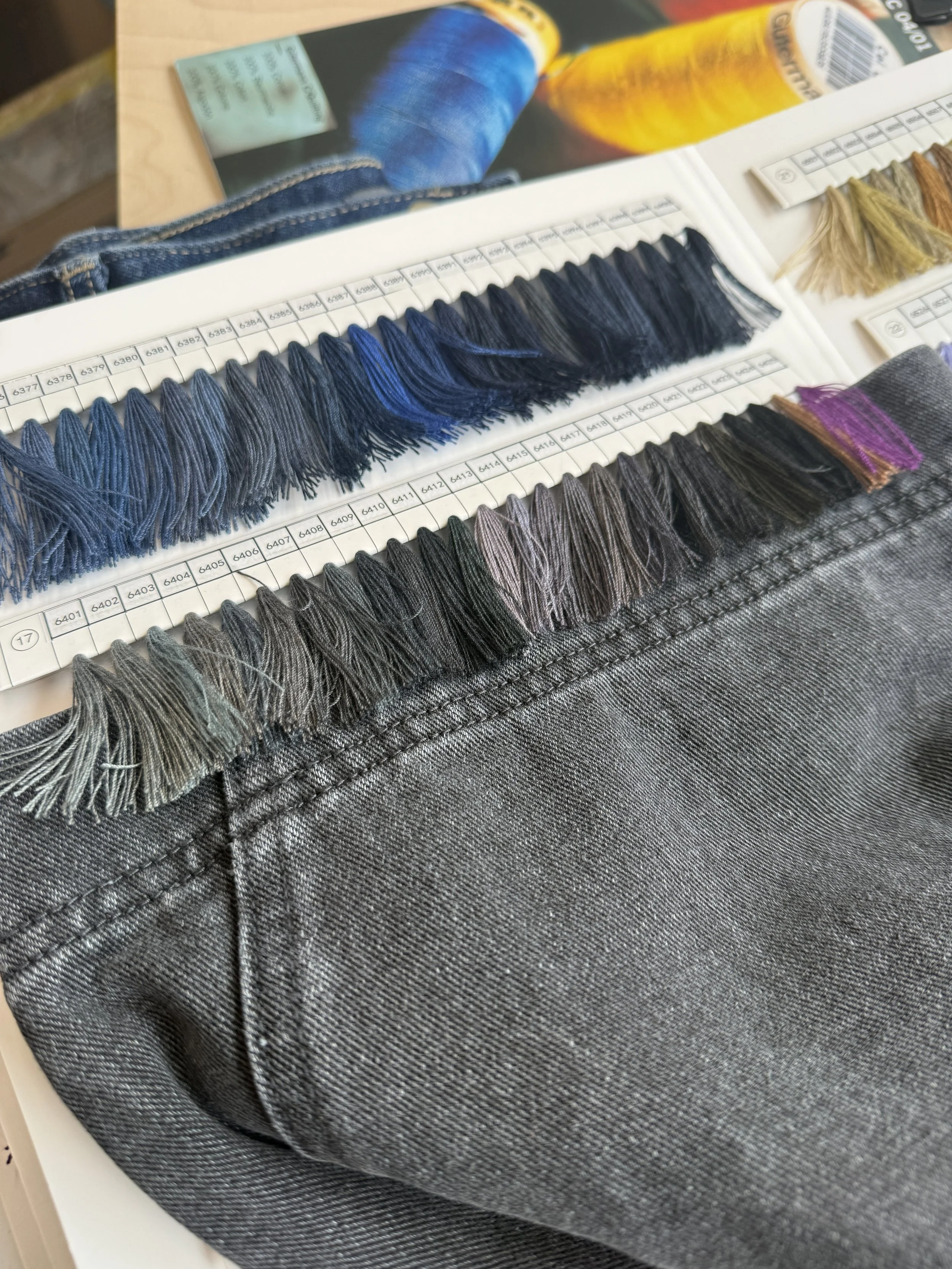
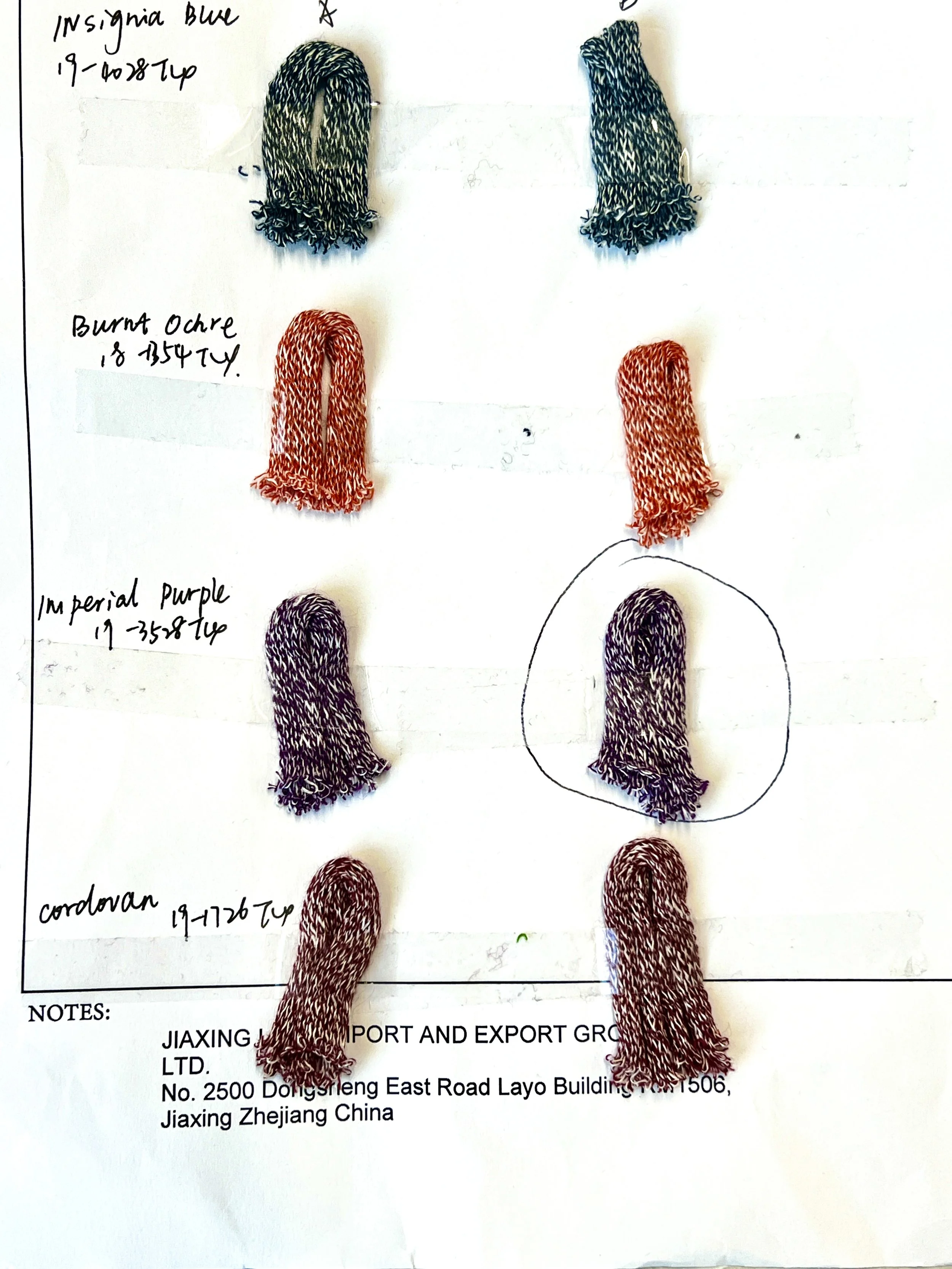
Colour is also more than choosing a palette that looks good on a rail. A purple top is one thing, but which purple? If you have ever opened a Pantone Cotton Planner you will know how many different tones live within a single colour family and choosing the wrong one can make or break the design. I will often select a shade and pull one step up and one step down just to make sure the hue is exactly right before committing. And it does not stop at fabric either. The tone of thread used for stitching, the buttons, zips and trims all feed into the identity of the garment. The wrong zip pull or a slightly off-tone topstitch can quietly undermine everything else around it.
Into the material
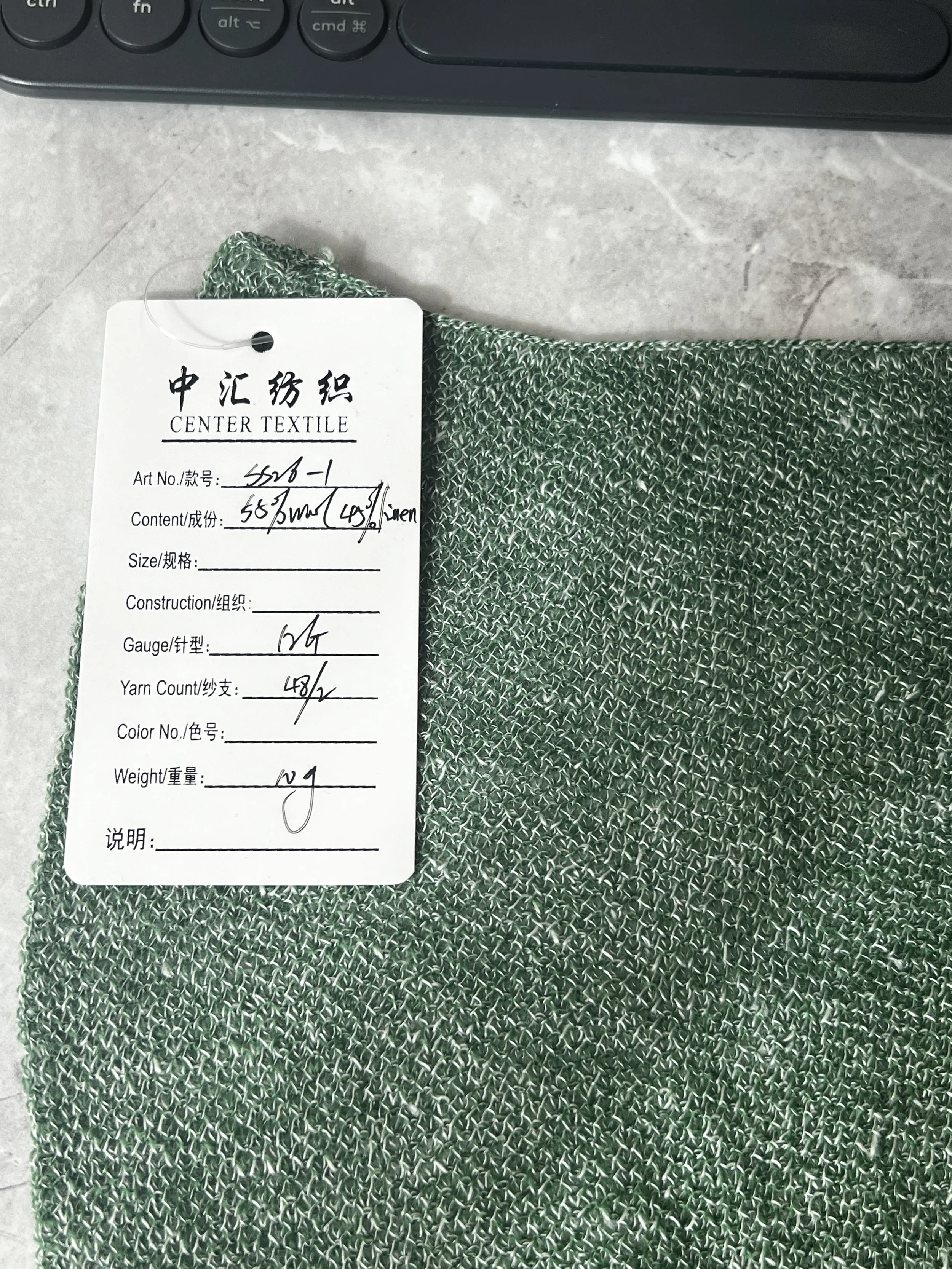
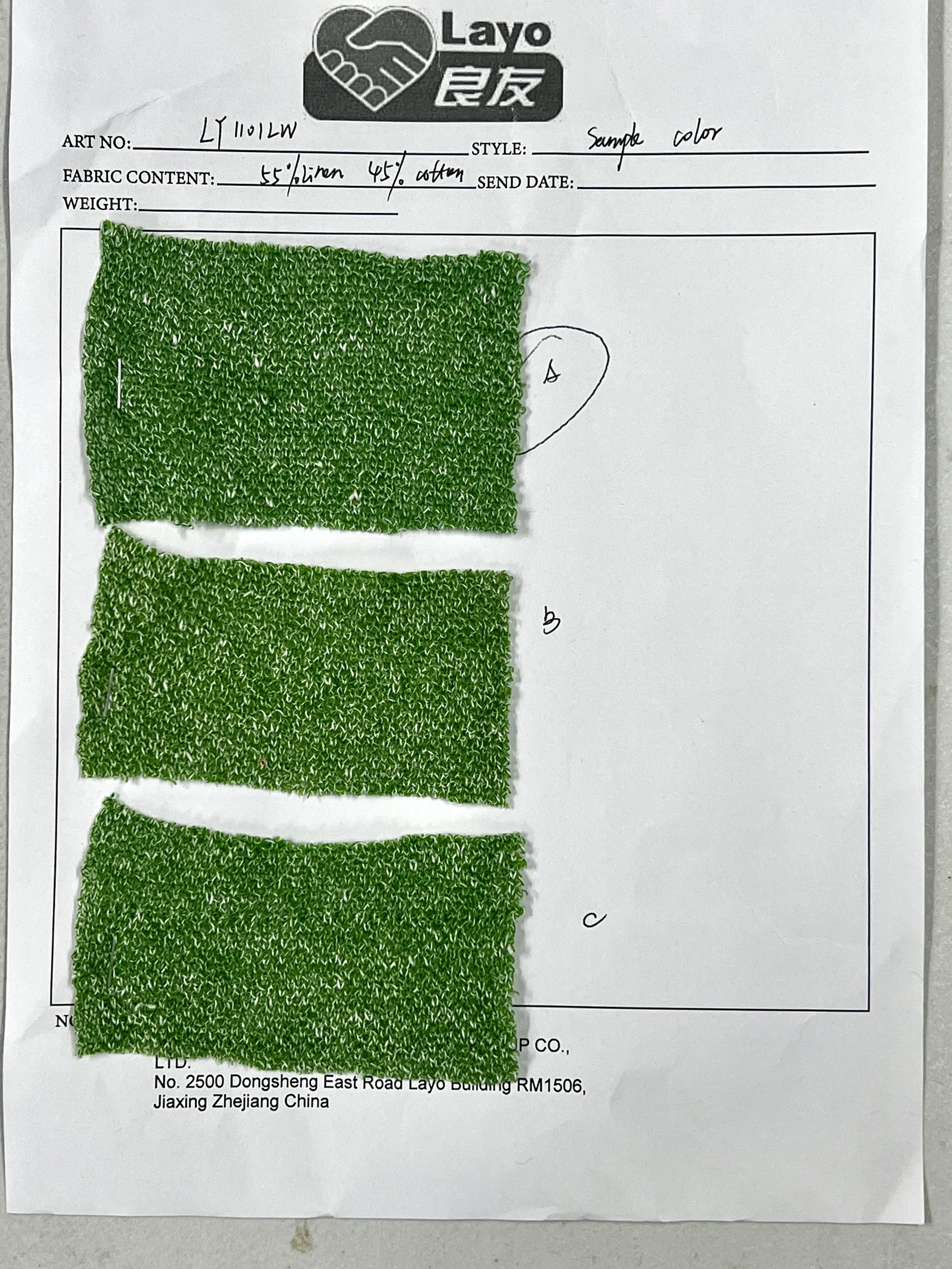
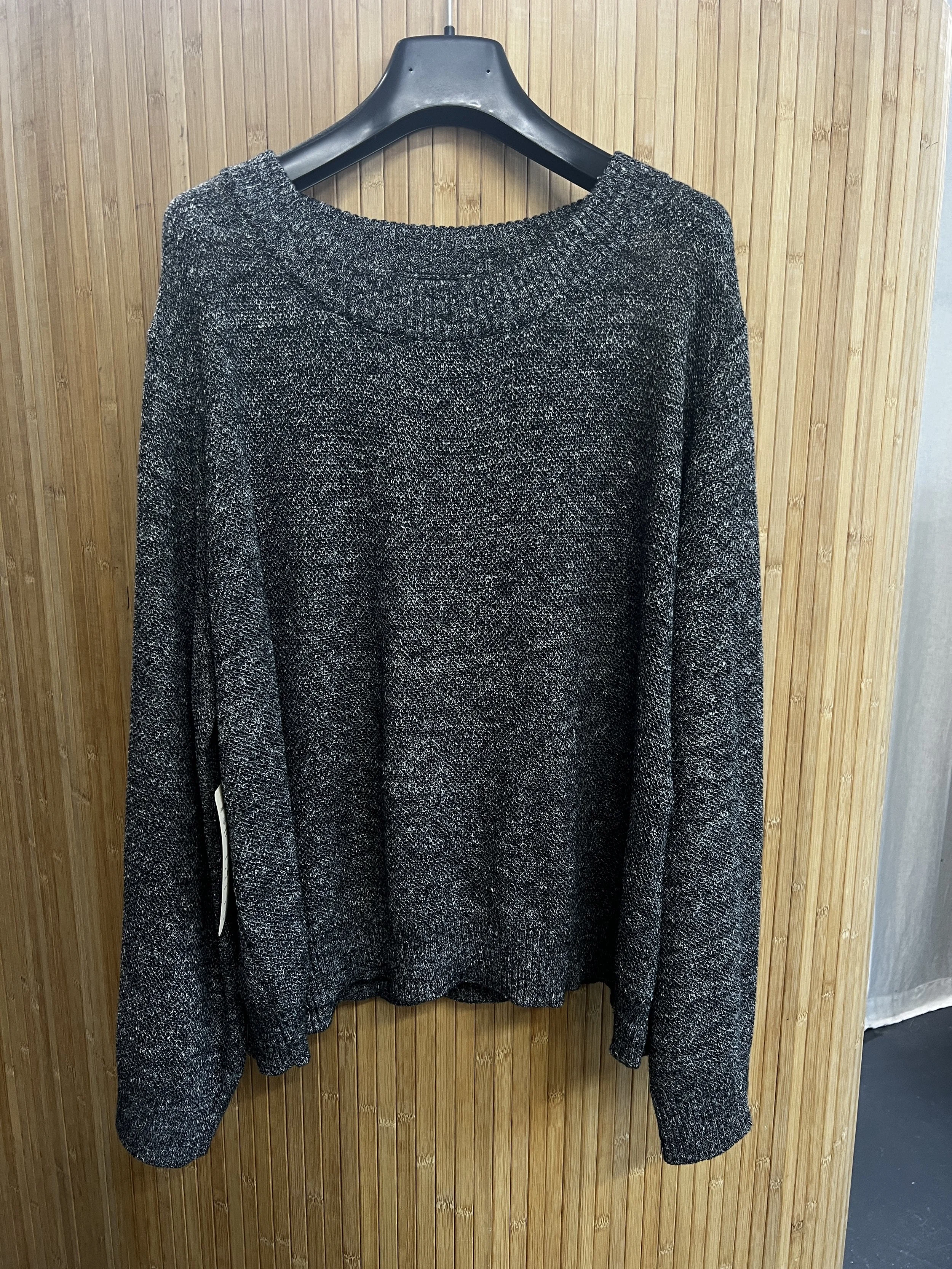
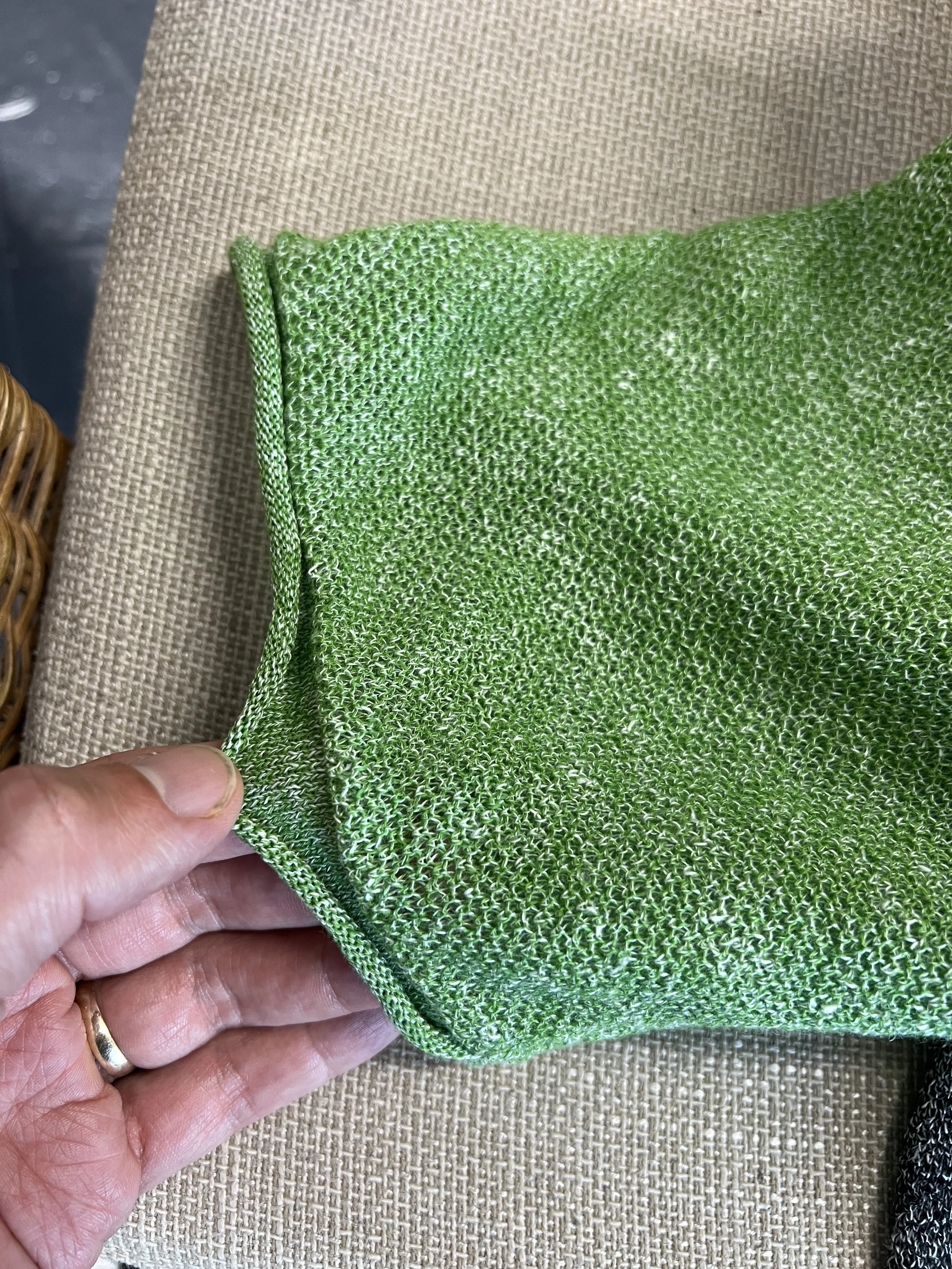
At Forgotten Tribes we have a winning t-shirt silhouette, long back, shorter front, boxy fit, slim three-quarter sleeves to elongate the arm, normally made in a hemp and organic cotton jersey blend. I wanted to explore that shape for a summer knitwear range and at Première Vision we found a linen and cotton twisted yarn which we later had developed into a loose honeycomb knit. It was such a beautiful material but when the sample swatch arrived there was absolutely no stretch. The give was completely different from jersey and I had to redevelop the pattern, adjust every measurement and rewrite the construction instructions from scratch. The finished garment looks and feels very similar to wear but the construction underneath is entirely different. I only got there because I started from the fabric and worked outward from there, step by step.
Development
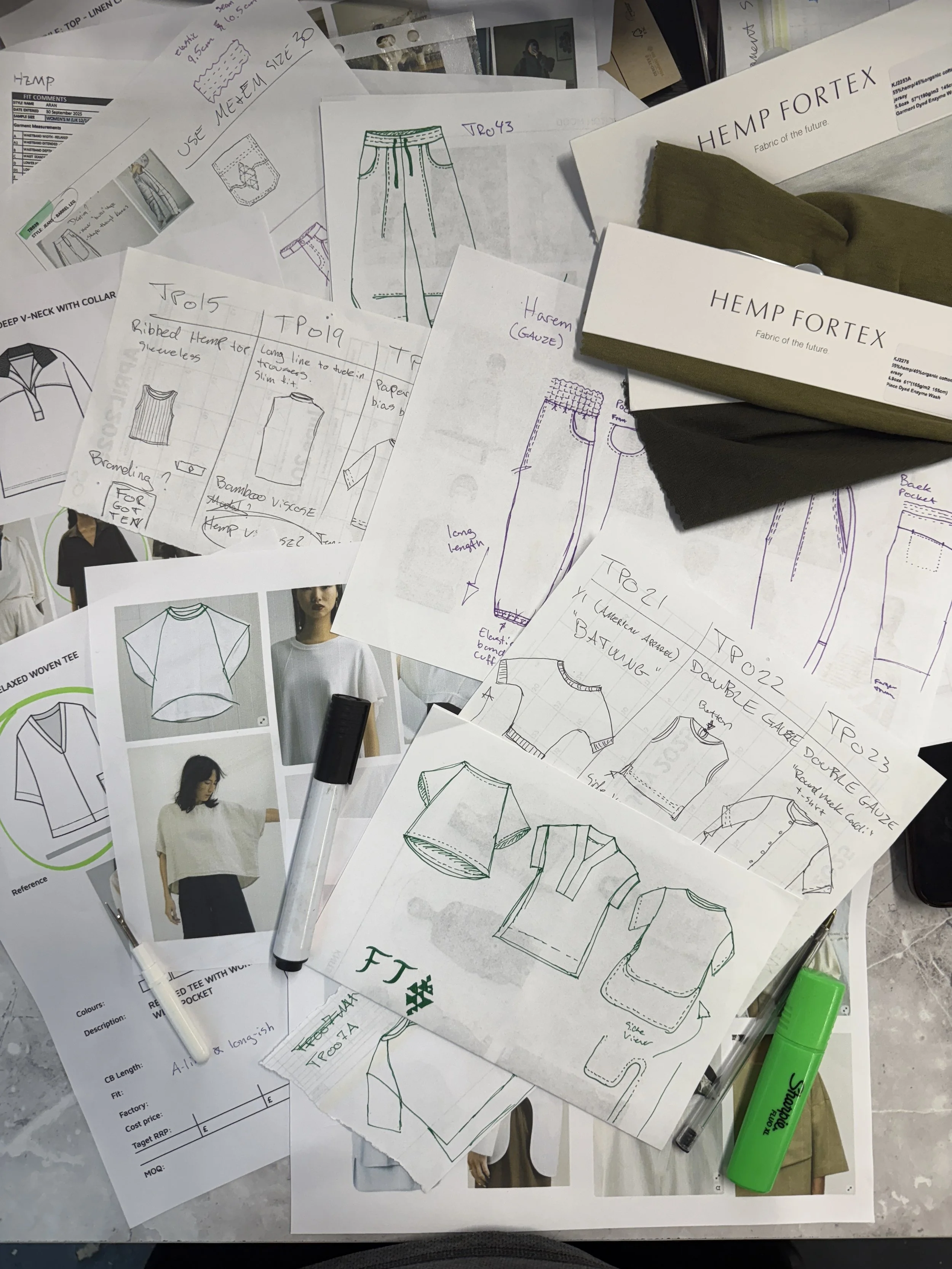
Once research, materials and colour start taking shape I create a product development sheet for every style, covering colour options, pricing structure, an initial sketch or technical flat, reference images, key measurements and fabric swatches, all on one page. Looking across the full range at that stage is where individual ideas start becoming a collection. I can see the gaps, the repetitions, where something is pulling in the wrong direction. Catching that early saves a lot of reworking later.
Sketching and tech packs
My sketchbook is not pretty. Half drawn ideas, arrows pointing at details, notes scrawled across margins, reference images alongside half finished silhouettes. The point is not a clean drawing, it is thinking out loud and leaving breadcrumbs.
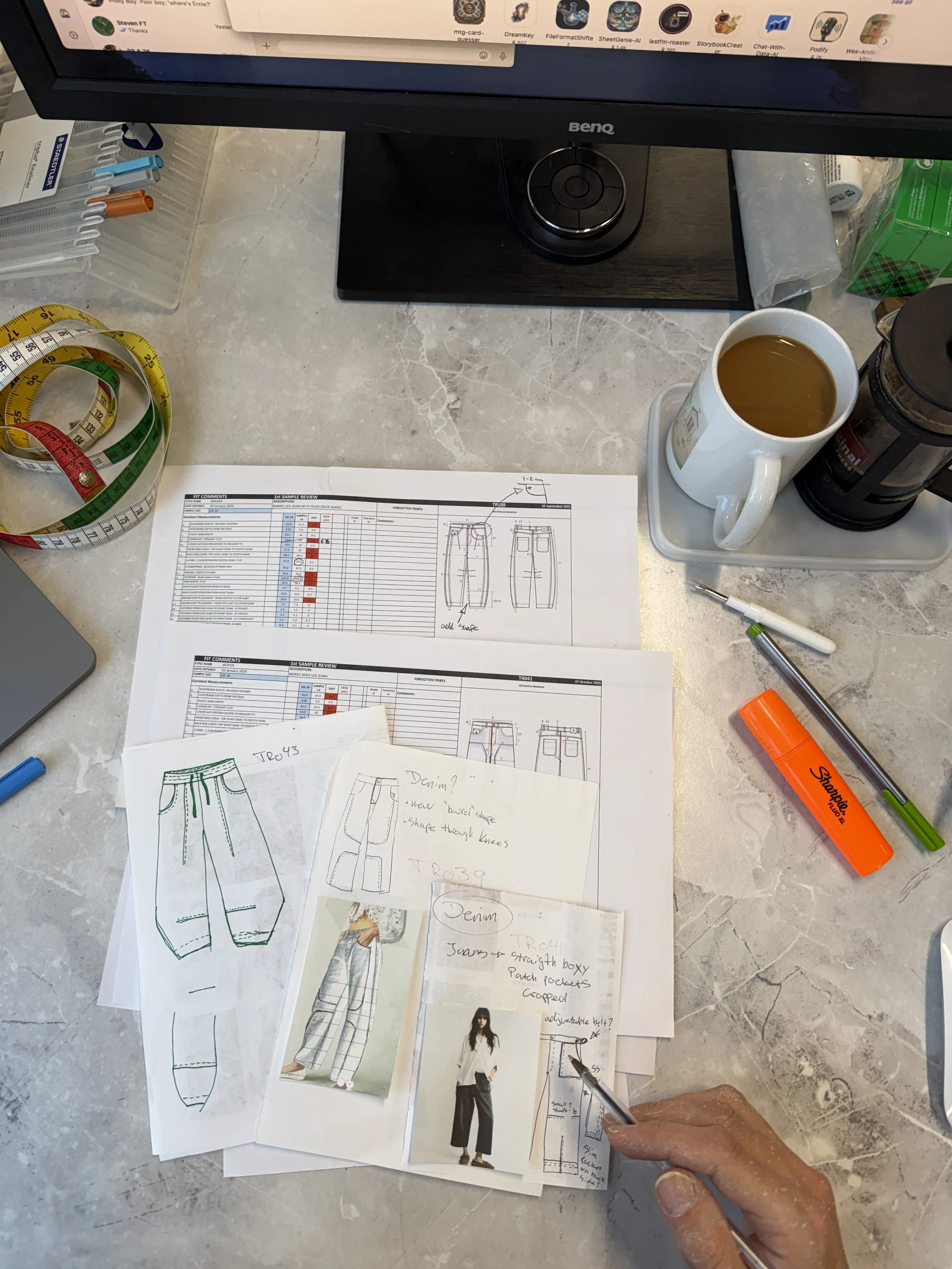
The cleaner version comes when I move into technical drawings and tech packs, which is a part of the process I genuinely enjoy. There is a real skill in communicating a garment clearly, giving a factory everything they need without overwhelming them. When something comes back wrong my first question is not just what did they miss but what could I have communicated better. There is nearly always something to improve in the template itself before the next round.
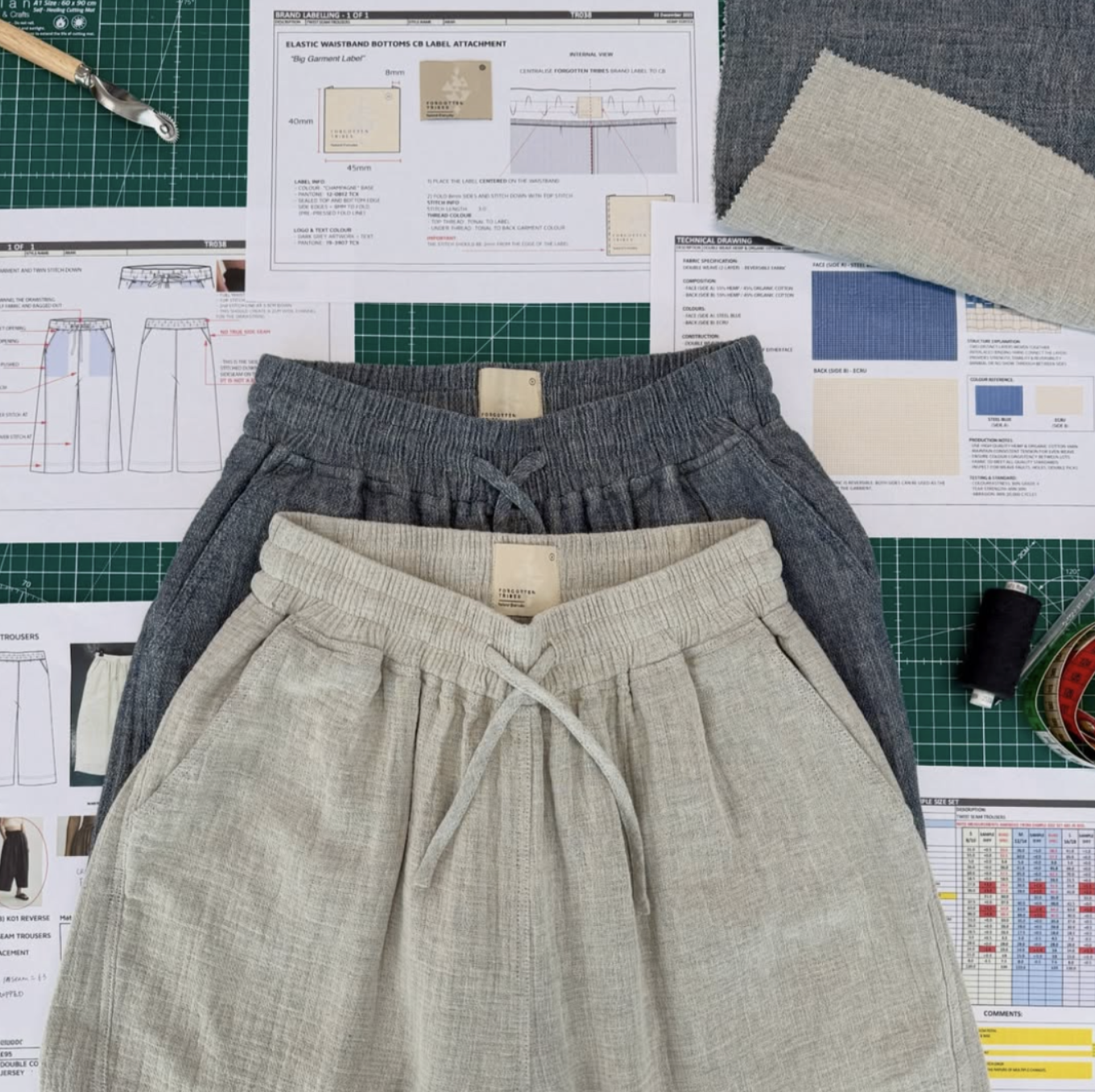
Sampling
Before anything goes to a factory I update the critical path to work out what needs to move first. Lead time drives everything. At Forgotten Tribes I often develop stripe jerseys from scratch, meaning the manufacturer has to spin the yarn, dye it and knit the fabric before garment development can even begin. Those go first, then other constructed materials, then denim washes, then knitwear. To keep things moving while long-lead fabrics are still being made I instruct samples in stock yarn of the same composition so the factory can get going on construction straight away. The final fabric only comes in for the full size set sign-off.
Feedback on samples is its own process. A design assistant goes through the tech pack first making notes against the spec, then I go through it adding updates, illustrations and imagery. The feedback sheets are rarely as clean as the original tech packs and that is fine, sometimes the most immediate layout is the easiest to understand. Staying on top of everything across multiple styles in development at once comes down to two things: the critical path as the shared team document covering all product information, and Todoist as my personal layer on top where I keep tasks, notes, pictures and target dates close to hand on both my phone and computer. The critical path is the source of truth. Todoist is how I keep my head straight day to day.
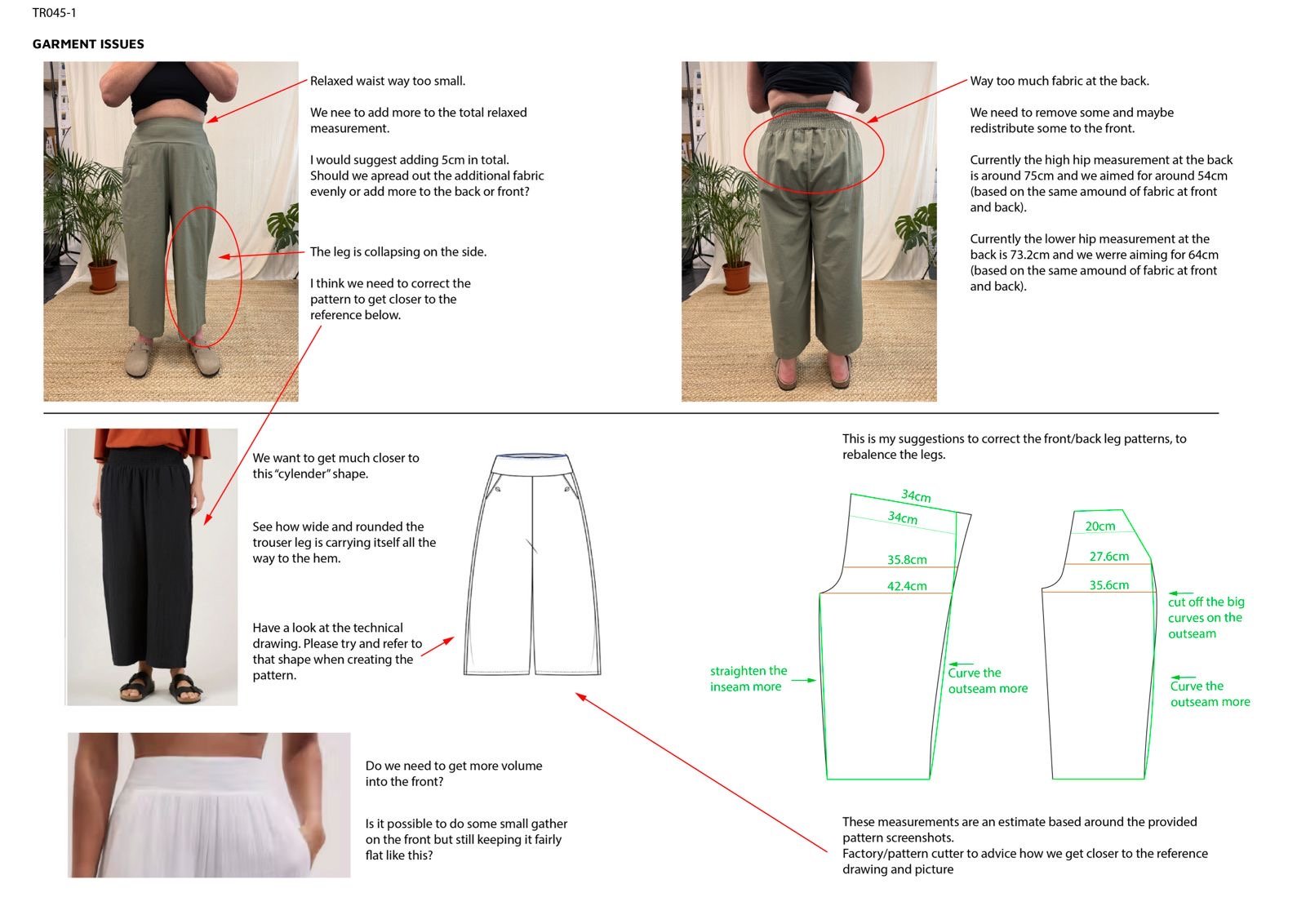
Example of my initial notes to the manufacturer
Sizing and fittings
Something I pushed hard on at Forgotten Tribes is the approach to sizing. Rather than working from the industry standard base of a UK10, I work from a UK14. Grading up from a UK10 tends to produce fit issues on larger sizes even though you are cutting a full size set, and fitting models on all sizes throughout. Working from the middle of the range gives a more proportionate grade across sizes 8 to 20 and the fit holds across the board rather than relying on a mechanical grade at the extremes. Returns were sitting at around 30 percent when I joined. Almost two years in they are closer to 15.
The whole thing is iterative. Nothing lands perfectly the first time and I have stopped expecting it to. The satisfaction is in the problem solving, figuring out why something is not working and finding a way through it that makes the final product better than the original idea. That is what keeps it interesting.