What Factory Trips Taught Me About Design
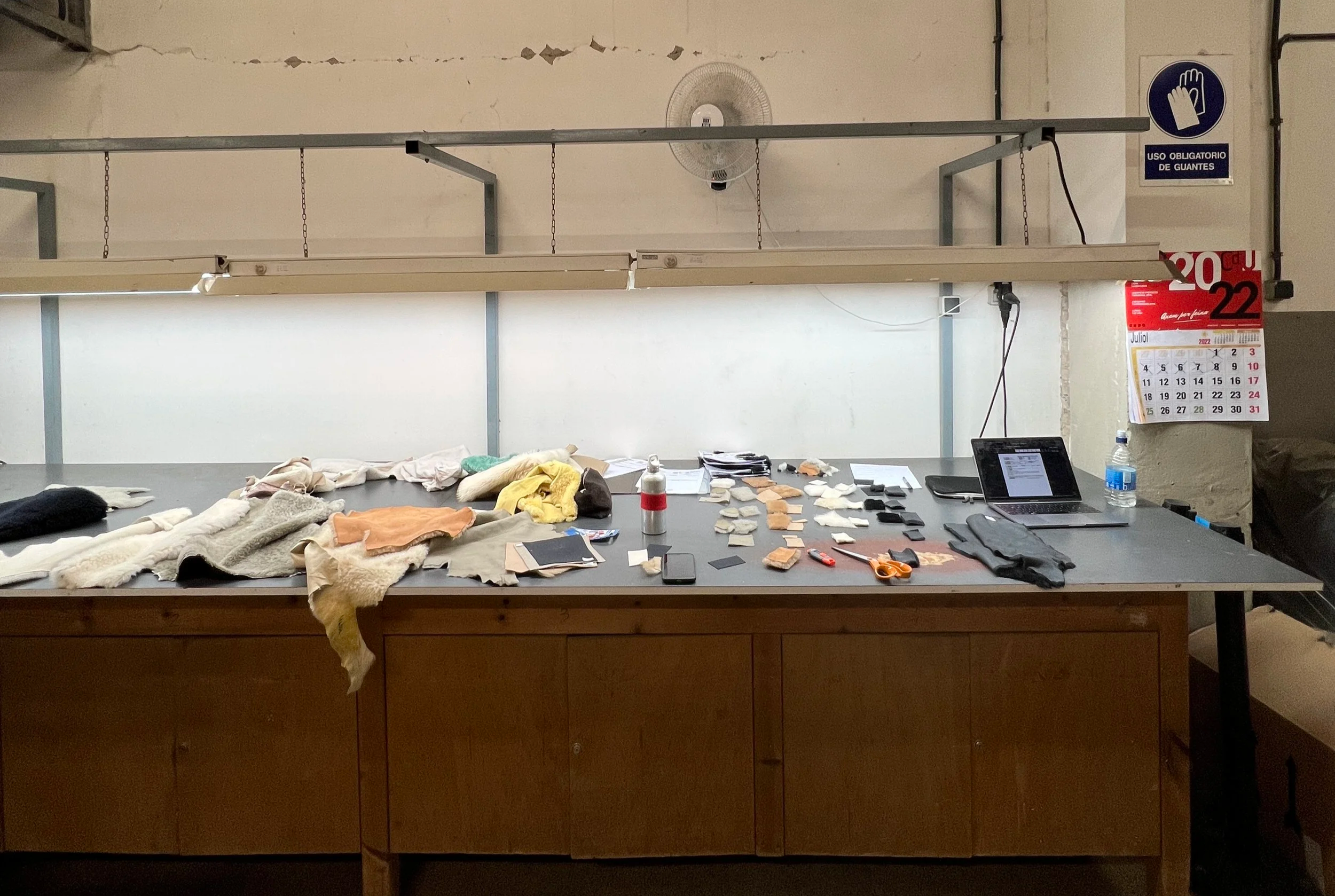
Development Trip, Barcelona, Spain
Some of the most important things I have learned as a designer did not happen in a studio.
They came from machinists, cutters, tanners, pressers and sample makers who knew things I did not, and were happy to tell me once they figured out I actually wanted to know. I know I am a people person, so maybe this comes more naturally to me than some. But I genuinely believe most people want to share what they are good at. They just need a small reason to.
The first few times I walked into a factory I did not really know what I was looking at. I knew I was somewhere important, but I did not know how to read the place yet. There were machines, rails, cutting tables, bundles, samples, people moving quickly between stages. A lot was being shown to me, and most of it was impressive, but I was mostly looking at the surface of things. I could see production happening without yet understanding where the real knowledge sat.
There is a version of design that stays entirely in the studio. Moodboards, references, silhouettes, colour stories, the whole thing beautifully presented on a deck and then handed off. I work like this most of the time. But at some point the idea has to be cut, stitched, pressed, finished, packed and worn, and the more time you spend close to that process, the better your instincts become back in the studio. Understanding what a fabric can and cannot do, how a construction behaves, where a pattern will fight you, feeds directly into the creative decisions. I start designing with the material rather than for it.
The People
It is easy enough to have a good relationship with the factory manager. You sit in the office, talk through the order, look at the samples, go for a company lunch. That relationship matters, but it is not the whole picture. The real value is in building trust with the people actually on the floor. The cutters, machinists, pressers, finishers, quality controllers, sample makers. The people who know the work through their hands.
Those are the people who understand the small things that never fully make it into a tech pack. How a fabric behaves when it is cut slightly off grain. How much pressure a seam can take before it starts to twist. Where production will become difficult before it has actually gone wrong. That knowledge is not always offered automatically. You earn access to it by being present, curious and willing to listen.
I learned quite quickly that asking questions was one of the easiest ways to build that trust. Sometimes I asked things I already knew the answer to, not to test anyone, but because I wanted to hear how they explained it, and just start easy conversation. When someone enjoys sharing what they know, listening properly is a much easier way to connect than trying to prove that you already know. That becomes especially true when there is a language barrier. You cannot always explain a complicated design issue perfectly across two languages, but you can point, show, ask, listen, repeat and slowly build a shared understanding that gets you further than any formal email thread would.
Being curious and genuinely friendly with the people, rather than just being “the client”, gets you further than almost anything else. They love it when you get stuck in and get your hands dirty. Factories have recut whole production runs for me with no fuss because there was enough trust and understanding of what I was trying to achieve. Another situation was me forgetting my lunch and ended up at the staff cookup, and honestly that table taught me as much as anything else. Not just technical things, but who is who, how the place actually works, what the relationships are between people, which football team they are all rooting for. You cannot fake that kind of connection. And when something does go wrong, which it will, you already know that everyone around you wants to help fix it. That is a really good thing to have on many levels, and this is how you get through a production run the easiest.
Quality Control
QC trips changed the way I look at garments, probably more than any other part of the process. A sample can be beautiful. Production is about whether that beauty has held across 300 to 500 units, each one cut and stitched by a different pair of hands on a slightly different day. At QC I am checking general construction, measurements, seam tension, trims, colour, handle, finishing and internal construction, all against the approved sample.
Signing off is a different kind of decision from approving a sample. When I sign off production I am saying: this is what the customer will receive. It becomes less about personal taste and more about whether I can stand behind it. That conversation is also very different when there is real trust on both sides. Rejecting something badly made stops being a standoff and becomes a shared conversation about the standard you are both trying to reach.
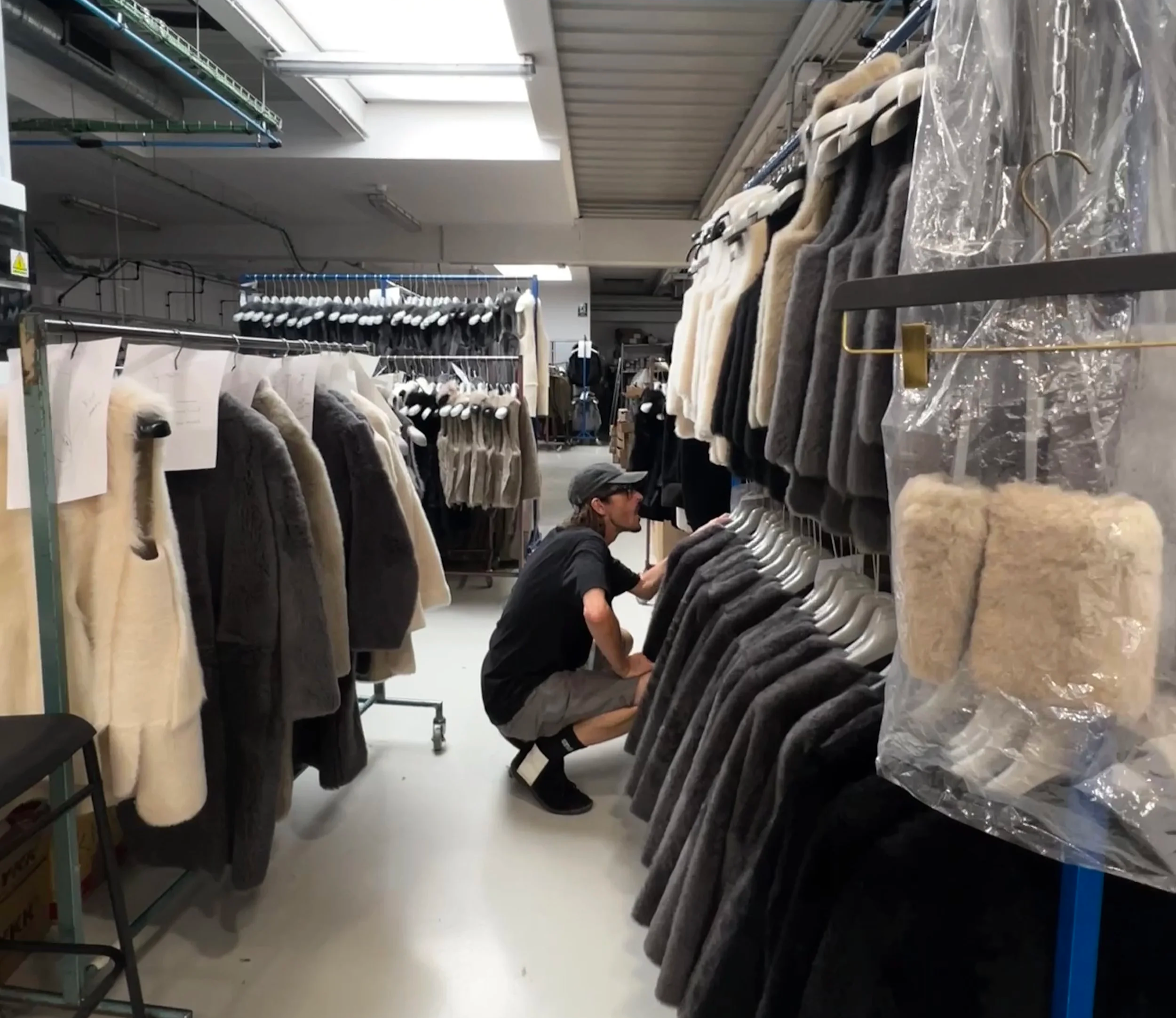
Quality Control, Barcelona, Spain
Material Sourcing and Development
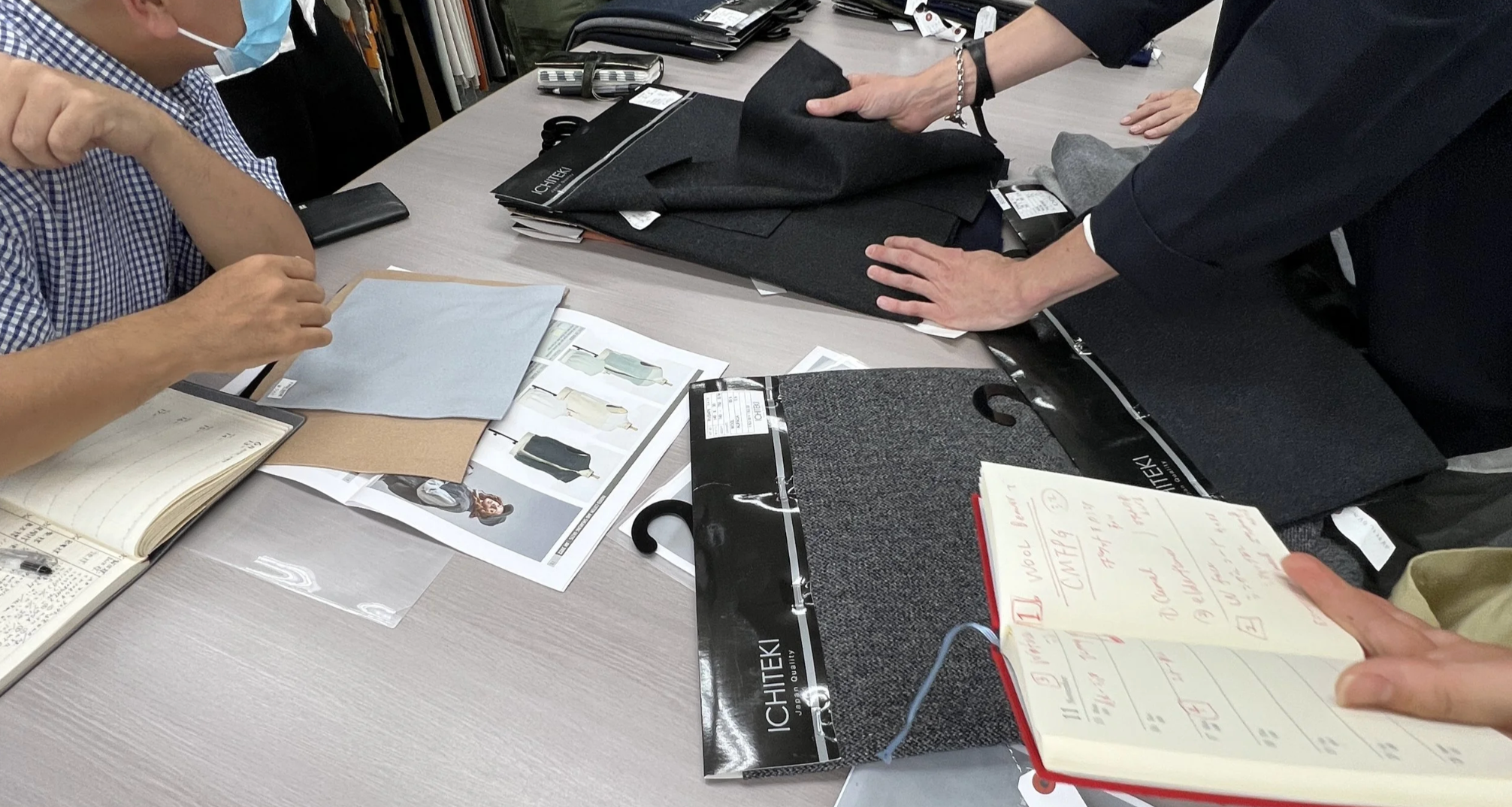
Material sourcing trips are where the texture of the job really shows. At Karl Donoghue I spent time on yearly trips to shearling and leather suppliers in Spain with my creative directors, and that is a completely different education from working in jersey or woven fabrics. With shearling you are working with two surfaces, the wool side and the skin side, and both have to feel considered.
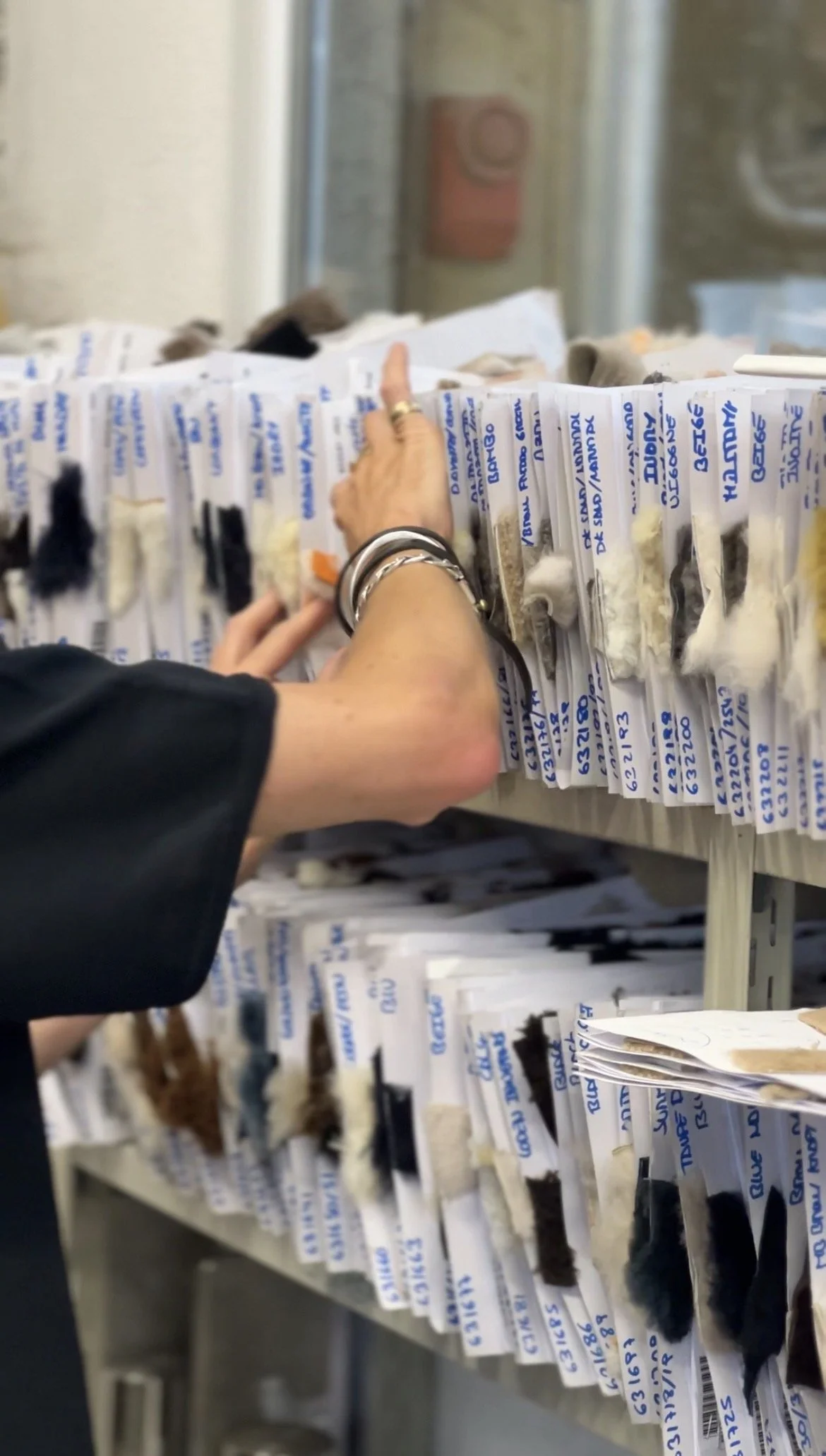
Being physically present changes the process entirely. Digging through old developments, rejected trials, finishes that almost worked, you start to understand their way of dyeing, coating, washing and handling the material. You see what they have already explored, but you also start to notice the blind spots. One of the things I got particularly interested in was nappalan, the coating applied to the skin side of shearling or leather. Too much and the surface feels plastic, that natural quality of the skin disappears. Too little and the leather reads as weak, small faults become too visible. The right balance is a tactile thing you cannot arrive at from a photo or a specification.
I have come to really value the usefulness of not knowing everything in those situations. When people have worked with a material for a long time it can become a lane that everyone stays in. Coming in from the outside and asking why something has to be done that way can open up another route. Not because you know more than the supplier, but because you are not carrying the same assumptions. Sometimes the answer is no. Sometimes it is maybe, let's test it. That is where development gets interesting.
There are many ways of making something work. Being there helps you find the ones that would never come out of an email.
What It Actually Taught Me
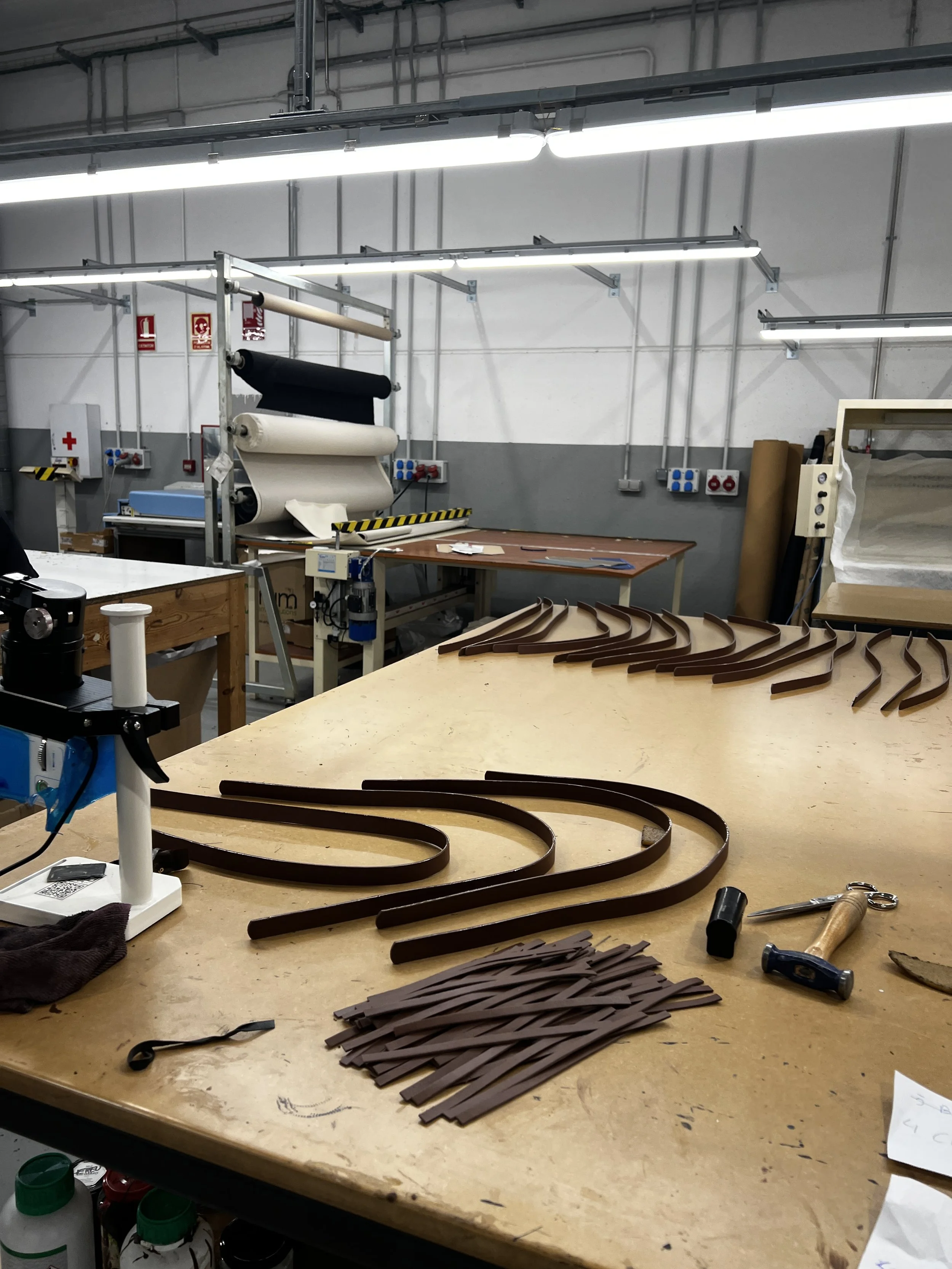
I think about this a lot: how much knowledge sits outside the studio. A supplier understands finish in a way I never fully will. A factory understands construction. A pattern cutter translates feeling into shape. A maker can show you where a garment is fighting against itself in a way that no amount of technical drawing will catch in advance. For me, product development is not a separate discipline from design. It is just the part of design where the idea becomes real. And the thing that makes that process actually work is not a good critical path or a clean tech pack, though both of those matter. It is the people. It always comes back to the people.